How to study the Bible
One method in four steps, four popular approaches compared, and a weekly rhythm you can keep when life gets loud.
Studying the Bible is a learnable skill, not a gift some people are born with. The method below is the one most study Bibles, seminaries, and small-group curricula quietly share: look carefully, understand in context, apply honestly, and pray. Everything else — SOAP, inductive study, verse mapping, lectio divina — is a different packaging of those same moves. Start with one short book and about twenty minutes, three times a week.
What's the season you're in?
Next step
Studying with other people is the single strongest predictor that you keep going. Find a free group nearby or online.
Find a Bible study near youBefore you start: three decisions
- Translation — NLT or NIV if you want ease, ESV or CSB if you want to stay closer to the wording. Any of them works; owning one you actually enjoy reading matters more than the debate.
- Book — Mark for the life of Jesus, Philippians for a short letter, Genesis 1–12 for origins, Psalms for prayer. Avoid starting in Leviticus or Revelation.
- Rhythm — three sessions a week of twenty minutes beats a daily plan you abandon in February. Put them in the calendar as appointments.
Step 1 — Observe: what does it actually say?
- Read the whole chapter once at normal speed, then read your paragraph slowly a second time.
- Mark repeated words, contrasts ('but', 'therefore'), commands, and time markers.
- Note who is speaking, who is listening, and what has just happened.
- Write three plain observations before you allow yourself any conclusion. This one discipline prevents most misreadings.
Step 2 — Interpret: what did the writer mean?
Ask who wrote this, to whom, and why. Check the genre — narrative describes, poetry paints, letters argue, proverbs generalise. Read the surrounding paragraphs; if your reading of a verse does not fit the paragraph, the paragraph wins. Where the historical setting matters (exile, persecution, famine, an argument in one specific church), a study Bible footnote or a free online commentary fills the gap in a minute or two.
Step 3 — Apply: what does it ask of me?
- Name one thing, not five. Specific beats sweeping every time.
- Prefer applications that would have made sense to the first readers — that filter screens out the strangest ideas.
- Write it where you will see it: a note, a calendar entry, a message to the person it involves.
- Revisit last week's application before you write this week's.
Step 4 — Pray and discuss
Close by praying the passage back — thanks for what it shows, honesty about what it exposes, a request for help with the application. Then bring one question to another person. Discussion is where you discover the reading you were too close to see, and it is the step most solo readers skip.
Four methods compared
- SOAP (Scripture, Observation, Application, Prayer) — 15 minutes, best for daily personal study and beginners.
- Inductive study — 30–45 minutes, best for working through one letter or gospel carefully over several weeks.
- Verse mapping — 20 minutes, best for one dense verse: cross-references, word study, alternate translations.
- Lectio divina — 15 minutes, best for prayerful, meditative reading of Psalms and the Gospels rather than analysis.
A weekly rhythm that survives busy seasons
- Monday — read the chapter, write three observations.
- Wednesday — interpret: context, genre, one cross-reference.
- Friday — apply and pray; write one sentence you could say out loud.
- Sunday — discuss the passage with a group, a friend, or an online community.
- Missed a week? Restart on the next scheduled day rather than trying to catch up.
Tools worth having (most are free)
- A study Bible in your chosen translation for background notes.
- A free parallel-translation site for comparing wording.
- A notebook or the prayer journal tool for observations and applications.
- A concordance or search tool for cross-references.
- One trusted person or group to ask when a passage stops making sense.
Common mistakes
- Deciding what a verse means before observing the paragraph.
- Reading only the verses that comfort you and skipping the ones that unsettle you.
- Turning narrative into command — the Bible reports many things it does not endorse.
- Studying so much that you never act on anything.
- Going it alone for months and quietly drifting off.
Frequently asked questions
- How do I study the Bible step by step?
- Pick one short book and read it whole. Then work a passage in four moves: observe what it says, interpret what the writer meant in context, apply one concrete thing, and pray it back. Repeat two or three times a week rather than trying to do it daily from a standing start.
- What is the difference between reading and studying the Bible?
- Reading covers ground and gives you the story; studying slows down on a paragraph and asks who wrote it, to whom, why, and what it means now. Most people need both — a wide reading plan plus one passage studied slowly each week.
- What is the SOAP Bible study method?
- SOAP stands for Scripture, Observation, Application, Prayer. You copy out a short passage, write what you notice, name one specific action or attitude it calls for, and close in prayer about it. It takes about fifteen minutes and suits personal study.
- What is inductive Bible study?
- Inductive study moves in three stages — observation, interpretation, application — and insists you finish observing before you decide what a text means. It is slower than SOAP and works well for a letter such as Philippians studied over several weeks.
- How long should a Bible study session take?
- Fifteen to thirty minutes for personal study, and sixty to seventy-five minutes for a group. Longer sessions rarely produce more insight, and shorter consistent sessions beat occasional long ones by a wide margin.
- Do I need to know Greek or Hebrew to study the Bible?
- No. Comparing two English translations, reading whole paragraphs, and checking the historical setting in a study Bible gets you most of the way. Free interlinear tools are useful for a specific word, but they are not a prerequisite.
- Should I study the Bible alone or in a group?
- Both. Personal study builds familiarity; a group exposes your blind spots and keeps you going in weeks when motivation drops. Many people study alone during the week and discuss one passage with a group every seven days.
Find people near you
Reading is better with company. These finders are free and take about a minute.
Readers who loved this also grabbed
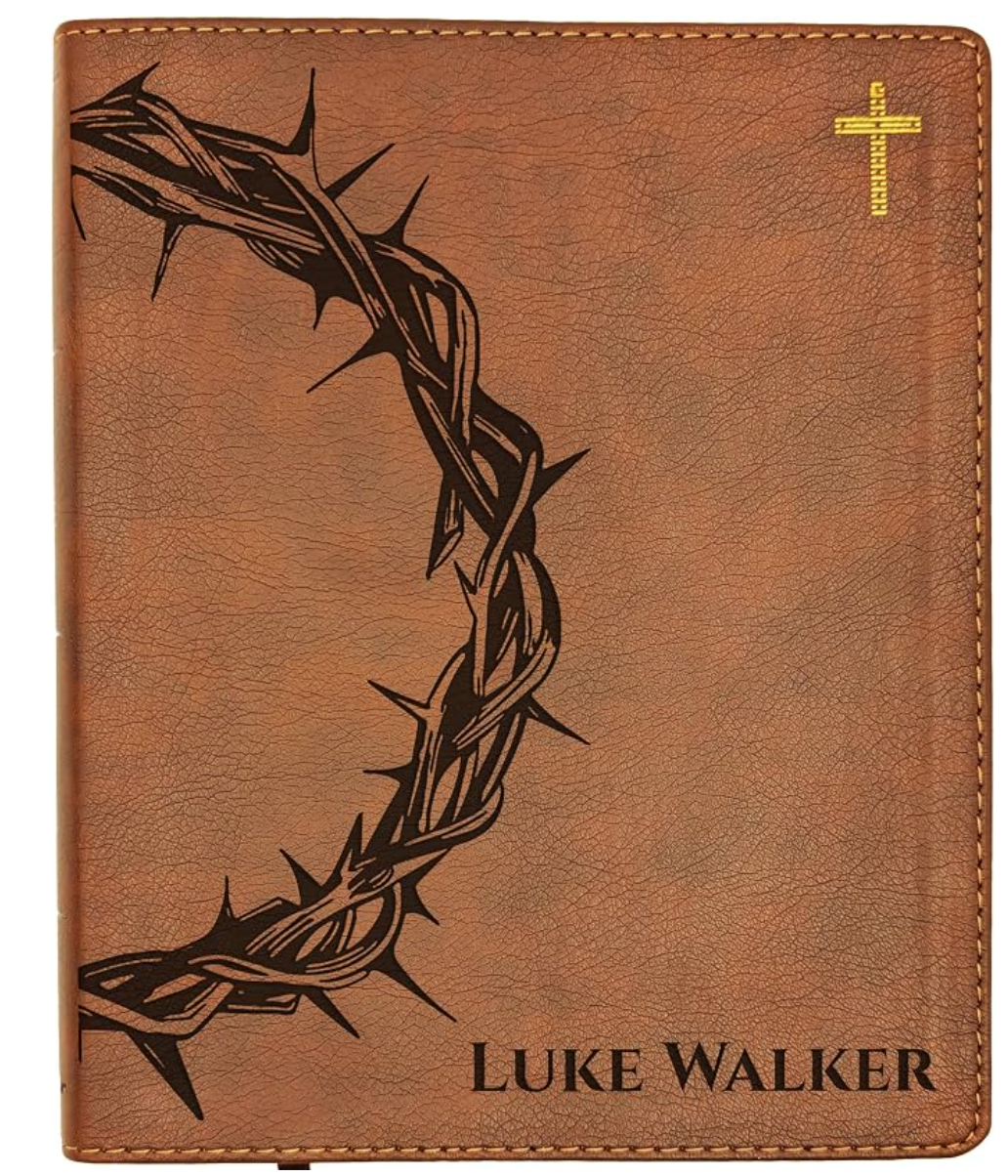
Farm & Posh Personalized NIV Bible — Crown of Thorns
Beautiful custom engraving on the cover — perfect for a baptism, confirmation, or a gift you'll actually keep. NIV translation, cross-references, words of Christ in red.
Affiliate — we may earn from qualifying purchases at no cost to you.
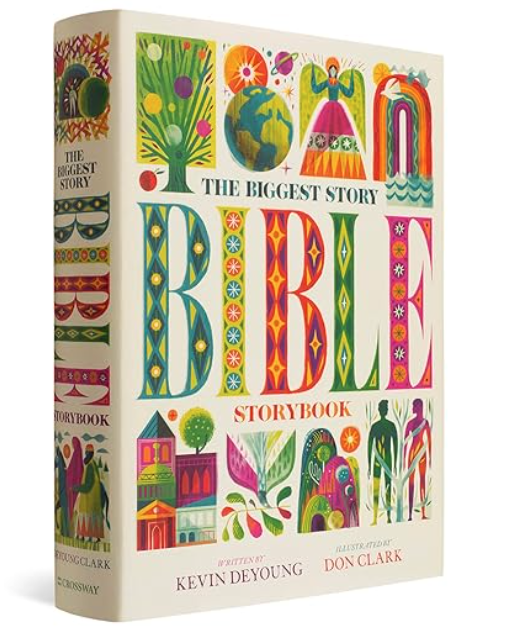
The Biggest Story Bible Storybook — Kevin DeYoung
Kevin DeYoung tells the whole Bible as one story across 104 short chapters, each with award-winning art by Don Clark and a closing prayer. Sewn binding and ribbon marker — a keepsake, not a paperback.
Affiliate — we may earn from qualifying purchases at no cost to you.
Studying with other people is the single strongest predictor that you keep going. Find a free group nearby or online.
Find a Bible study near youBrowse all guides, free tools, or search the whole site.