Youth Bible study
A one-hour format teens actually come back to — real questions, short passages, and Scripture that meets them where they are.
Teenagers don't disengage because the Bible is boring. They disengage when a study is all lecture, when questions have obvious right answers, or when the room isn't safe to be honest in. This guide gives you a repeatable 60-minute format, the books and topics that consistently work with teens, discussion questions you can use tonight, and an 8-week starter plan.
What's the season you're in?
Next step
Enter the passage your youth group is reading and get an opener plus observation, interpretation, and application questions ready to print.
Get discussion questions for tonight's passageWhat makes a youth Bible study work
- Safety first. Teens share when they know they won't be mocked or reported on.
- Short passages. Ten verses discussed well beat a whole chapter skimmed.
- Questions over answers. Your job is to ask well, not to fill silence.
- Food. It is not a gimmick; it changes the room.
- Consistency. Same night, same place, every week — even when only three show up.
- Small circles. Break into groups of four to six for the discussion block.
A 60-minute youth group format
- 0:00–0:10 — Food and hangout. Learn one new thing about one student.
- 0:10–0:15 — Opener question with no wrong answer (high/low of your week).
- 0:15–0:25 — Read the passage aloud, taking turns by verse, then read it once more silently.
- 0:25–0:50 — Discussion in circles of four to six: what it says, what it means, what it asks of us.
- 0:50–1:00 — Prayer requests and pray out loud together. Name one thing to try this week.
Best books of the Bible for teens
- Mark — fast-moving, action-forward account of Jesus (16 short chapters).
- James — blunt, practical, about speech, money, patience, and integrity.
- Philippians — joy and identity in four readable chapters.
- Ruth — a story about loyalty, grief, and provision that reads like a short film.
- Jonah — running from God, and what mercy actually looks like.
- 1 John — love, truth, and assurance in plain language.
- Psalms (selected) — honest emotion, including anger and despair.
- Genesis 1–12 — origins, identity, and the beginning of the whole story.
Bible study topics for teenagers
- Identity — Psalm 139, Ephesians 1:3–14, Genesis 1:26–27.
- Anxiety and mental health — Philippians 4:4–9, Matthew 6:25–34, Psalm 42.
- Friendship — Proverbs 13:20, 17:17, 1 Samuel 18:1–4.
- Dating, purity, and self-worth — 1 Thessalonians 4:1–8, Song of Songs 8:4, 1 Corinthians 6:19–20.
- Doubt and hard questions — John 20:24–29, Mark 9:24, Psalm 73.
- Social media and comparison — Galatians 1:10, 6:4–5, 2 Corinthians 10:12.
- Forgiveness — Matthew 18:21–35, Colossians 3:12–14.
- Purpose and calling — Jeremiah 29:11, Ephesians 2:10, 1 Timothy 4:12.
- Prayer — Matthew 6:5–15, Luke 11:1–13.
- Suffering and loss — Romans 8:18–39, Lamentations 3:19–26, John 11.
An 8-week starter plan (the Gospel of Mark)
- Week 1 — Mark 1:1–20: who Jesus is and what he asks first.
- Week 2 — Mark 2:1–12: friends who carry you, and forgiveness.
- Week 3 — Mark 4:1–20: what makes faith actually grow.
- Week 4 — Mark 4:35–41: fear, storms, and 'do you still have no faith?'
- Week 5 — Mark 5:21–43: Jesus and the people everyone else skipped.
- Week 6 — Mark 8:27–38: the biggest question in the book, asked of you.
- Week 7 — Mark 10:17–31: money, comfort, and what's hard to let go of.
- Week 8 — Mark 15–16: the cross, the empty tomb, and what changes now.
Discussion questions that work with any passage
- What's one word you'd use to describe this passage?
- What surprised you or confused you here?
- What does this show us about God? About people?
- If this is true, what does it change about Monday?
- Where is this hard to believe?
- What's one thing you'll try before we meet next week?
How to get quiet teens talking
- Sit in a circle. Never rows, never behind a podium.
- Ask the easy question first and let three people answer before going deeper.
- Count to ten in your head before rescuing silence.
- Never say 'no, that's wrong.' Say 'say more about that,' then guide back to the text.
- Split large groups — five to eight students per adult is the ceiling for real conversation.
- Follow up during the week. A single text between meetings raises attendance more than any game.
For youth leaders and volunteers
- Prepare the passage yourself first — read it five times before you teach it.
- Write six questions and expect to use three.
- Keep a two-adult rule in every room for student safety.
- Track who spoke and who didn't; invite the quiet student first next week.
- Give parents a one-paragraph summary each week so faith conversations continue at home.
- Finish something. An 8-week plan you complete builds more momentum than an open-ended series.
Find people near you
Reading is better with company. These finders are free and take about a minute.
Readers who loved this also grabbed
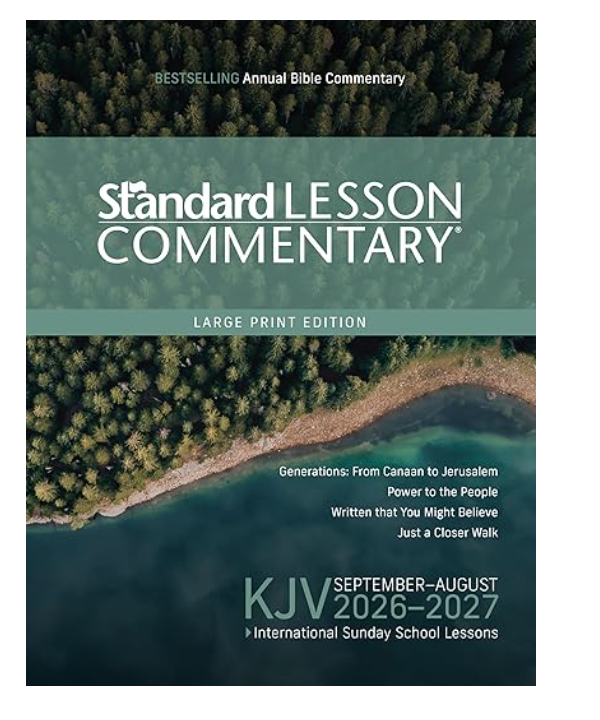
KJV Standard Lesson Commentary® 2026–2027 (Large Print)
The world's most popular annual Bible commentary, trusted for 60+ years. Printed KJV text, verse-by-verse notes, historical context, discussion questions, and group activities — 14pt large print.
Affiliate — we may earn from qualifying purchases at no cost to you.
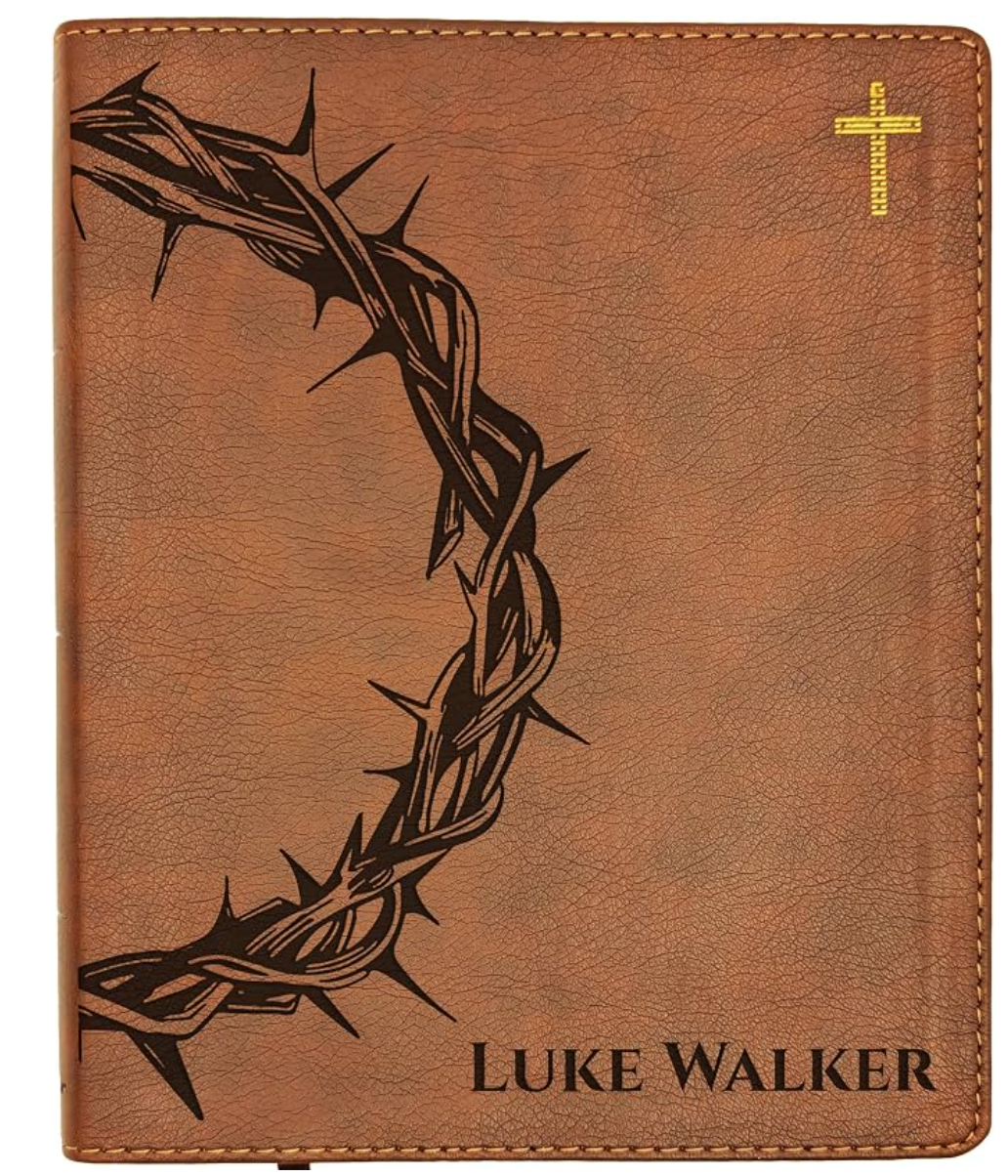
Farm & Posh Personalized NIV Bible — Crown of Thorns
Beautiful custom engraving on the cover — perfect for a baptism, confirmation, or a gift you'll actually keep. NIV translation, cross-references, words of Christ in red.
Affiliate — we may earn from qualifying purchases at no cost to you.
Enter the passage your youth group is reading and get an opener plus observation, interpretation, and application questions ready to print.
Get discussion questions for tonight's passageBrowse all guides, free tools, or search the whole site.